Friday, 8 April 2016

Home and Away

 
So the main thread of my last weeks birding, based in York, has been to focus on seeing things that I can't readily enjoy within the Ely10.  Cambridgeshire does have one very old record of Red Grouse but neither this or it's even scarcer brethren the Black Grouse could be expected to grace the county until the next Ice Age.  Icy it was on the tops of the Northern Pennines.
 
 
An especially early rise was needed to ensure we could see the Black Grouse lek in full swing, and swing it did with over 60 birds seen over 2 leks within a couple of miles of one another.  As the leks dissipated birds spread over more fields and could be seen well picking amongst the sward.  A couple of Snow Bunting flew over, rippling calls through the cold sharp air.  All around Curlew song trembled, Snipe drummed and plaintive Golden Plover calls intermingled with the bubbling communion of the grouse lek.  It was a beautiful series of moments.


At the coast, the photogenic species are scarce but regular visitors to the Ely10 in the right conditions.  
  
 
I have seen a Fulmar, many years ago, grounded in a field to the south of Wicken - I don't think there's been another in the Ely10 since. Kittiwakes do move through the Washes in early Spring every year, I've seen a couple in the past and undoubtedly many pass unnoticed.  There has been an occasion when over 100 have moved through during a day and I can only hope that I'm lucky enough to see a similar passage in the future.


Guillemots have been recorded  over the years moving up the tidal systems within the Ely10 and some have been well watched, not unfortunately yet by me.
 
 
Gannets have also been recorded with some regularity over the past few years over the Ely10 and I have managed to miss them despite some intense skywatching during protracted spells of overland seabird movement.   These movements are usually, but not exclusively, associated with strong NW winds and inclement weather during September to November.
 
 
More frequent but still not a species I have encountered are Seals, there are even records of these having bred at Earith Marina, which seems bizarre.
 
 
This young Grey Seal was tucked way on the Brigg at Filey where a Surf Scoter has taken up residence offshore.  It is now moulting into a more adult plumage, the white nape being diagnostic along with the opened winged dive. 
 
 
Three species increasingly encountered across Yorkshire are Tree Sparrow, Red Kite and Woodlark.  The Red Kite story is well known and birds are in filling from both the east and west.  Wheeling flocks of 20 or 30 birds can be seen around Leeds and singles from most vantage points during a prolonged skywatch. 

 
Tree Sparrows did become scarce but reassuringly I saw healthy numbers on the coast and inland. There is much to learn about the population dynamics of this short range migrant which in some parts of the globe is abundant and in others has become scarce or extinct.  The Yorkshire populations have been well supported by conservationists and enlightened landowners alike.  Having seen the Ely10 populations dwindle, there is some signs of small scale local increase a Yorkshire scale bounce back would be welcome.
 
 
Woodlarks are a favourite of mine and I could have only dreamt of singing birds on my local Nightjar heath when I were a youth.  Now the Nightjars have near enough given up the ghost in the Vale of York but Woodlark song breaks the dawn and I made time to drink them in.  The Sparrows and Kites will hopefully increase from there current population status in the Ely10. Woodlark has bred twice in Cambridgeshire at Kennet Heath just out of the 10, but are not likely to gain a toe hold again as there is no real habitat.  The few Breck type fields just east of Fordham could just hold a pair and maybe there's a bit of habitat in Chippenham Park somewhere. 


We've definitely lost Willow Tit as a breeding species in Ely10 and Cambridgeshire, I was very keen to locate some during my time in the north.  This is the fastest declining UK breeder and little is clearly evidenced about the causes of decline.  I had a few sites in the Lower Derwent Valley to try and drew a blank but did find a territorial pair on Allerthorpe Common nearby.  I went here on a hunch, a site I'd never visited, and was very pleased to have followed my instincts and read the habitat well.  It was a very wet experience but rewarding spending time with them as they went about their business including some nest site excavation. 


On the way back to the Fens I dropped into Fairburn Ings RSPB where Willow Tits visit the feeders. We didn't see any on the feeders but did find a vocal pair, that stayed high in the birches,  and at Eccup Reservoir nearby I was quite surprised to find a showy pair of Little Ringed Plover on the Dam.
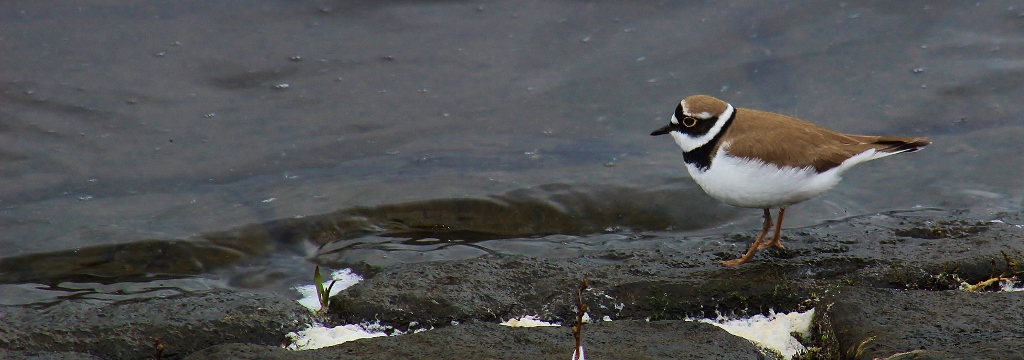


Sunday, 3 April 2016

Cache and Carry

According to folklore 'On the third of April come the Cuckoo and the Nightingale'. Surely a fraction early in most years, at least for Cambridgeshire, though if this phrase was coined before the switch to the Gregorian calendar in 1752 then it would place the expected arrival day on what is now April 15th... A flick through the last 10 Cambridgeshire Bird Reports reveals that Cuckoos rarely arrive in the county on or before the 3rd (only twice in that time), but they are usually here by the 15th (which is the latest they've been found (twice) in that time). Nightingales, it appears, generally arrive in the county a fraction earlier than Cuckoos - but again, somewhere between the 3rd and the 15th on average. Interestingly, (ahem), in 2013 Cuckoos began to arrive in Cambridgeshire extra early, with 3 reports on March 24th. Typically, that year marked the latest that Nightingales arrived within the decade. As Winnie-the-Pooh might have observed, you never can tell with birds.

A career as a statistician ruled out, I decided to head over to Wicken Fen, hoping to see if I could find signs of either species. Needless to say, neither obliged, but it was a fine day to be out. Chiffchaffs noisily proclaimed their return, Peacock butterflies flitted about the 'pussy' willow flowers and Marsh Harriers soared effortlessly above the reeds. A pair of Toads ably demonstrated what the season is all about.


Over on Burwell Fen, the Winter order was not yet finished. Short-Eared Owls put on a fine display, with at least 2, but possibly up to 4 birds on show. One individual, whose plumage positively shone in the Spring sunshine, exhibited some interesting behaviour. Twice it caught voles and on both occasions appeared to take them to a (different) tussock of grass and leave them there. No doubt other explanations exist but it looked to me as if the owl were caching food, which I was unaware they did (on one occasion it even appeared to  look round as if checking nobody was watching where it stashed the vole, but that might be pushing it!)...

Further on a Hare ran across the path and bolted away through the grass at impressive speed. As I watched, a slight flicker of movement betrayed a fine male Wheatear down on the cropped grass. A handsome symbol of the changing year.

Friday, 25 March 2016

Good Friday


It was good to be off work and it was good to be out and about in the warming Springness of things.  Welney was packed with families and kids, including ours, doing Easter duck hunts, pond dipping and the like.  The water levels are high on the washes and on Lady Fen the conditions look great for waders.  Everywhere I looked Buzzards were up and wheeling around, a small kettle of 5 drifted North in a thermal.  A pair of Pied Wagtail appeared to be on territory around the observatory but I was unable to find a White Wagtail on it's way to Iceland out on the Fen, neither could I turn any of the assembled Pipits into anything of note. 


Back into Cambridgeshire at Four Balls Farm Brendan stopped to let me know he'd found a Spoonbill earlier in the day, to the North.  Although I checked through the assembled masses of wildfowl my mind was on the sky and thoughts of Osprey storming North to reach breeding grounds.  An impressive congregation of Whooper Swans straddling the flood created a pleasant diversion and a lone White-fronted Goose was with the flock on the adjacent fields. 


At the Settling Beds back in Ely the Marsh Harriers were high on hormones.  7 birds were scrapping, dancing and whistling their way across the skies.  At one point there were 3 Skydances concurrently above us.  It's all starting to happen.........
   

Sunday, 20 March 2016

Love Is In The Air

I got up early and was on the Washes not long after 6.  Barn Owls were much in evidence along the roadsides and I saw 5 between Pymoor and Welney.  The water levels were high and, although there were lots of wildfowl to admire and search through, there were few waders to enjoy.  At Four Balls Farm a smart drake Scaup was busy feeding and there were Pochard in abundance further along at Pymoor 2 hybrid ducks that Brendan had described on Cambirds were still present.  1 at distance looked to be a straight Pochard/Tuftie grey backed and smudgy the other was closer and appears to be a Ring-necked/Tuftie but I guess it's difficult to be precise about lineage with these Aythya's .


A Black Necked Grebe in summer plumage bobbed it's way along the back shore and back towards Four Balls Farm the unmistakeable bugling of Cranes drew my eyes to the horizon and I quickly picked up a first and then a second winging their way East.  

Later in the day I headed to the woods with the family.  At Lynford there were Firecrests vocal and singing as the sun broke through the thinning cloud.  It's a joy to have these beautiful sprytes with stripes close to home, better than any Siberian phyllosc in my book. 


A couple of Hawfinch, a Goshawk and Woodlark made up the remains of a great day.  Spring springing all around.  The pond where Mandarin stood on ice just a few weeks ago was, today, heaving with hundreds of frogs, cacophonous in chorus, while a Nuthatch proclaimed territory high above. 


Thursday, 10 March 2016

Goosie In The Sky With Diamonds


Arrrghhh they get worse don't they.  I wouldn't have awkwardly shoe horned this title had it not been for the death of George Martin this week but it's on my mind.

The Goosie was not a Anser but a sawbill.  I have seen very few sawbills within the Ely10, 4 or 5 Smew and even fewer Goosander make up the tally.  So it was a complete surprise to step out to the car this morning and look up to see a drake Goosander flying quite low over the Elm tops and towards the small reservoir beyond Stuntney Hall.  A great addition to the garden list, which remains a magical, mystery number until I have a count up.

Thursday, 3 March 2016

Talking about my murmeration


A lone Fieldfare, or Twurzel, as I like to call them, sat a top the hedgerow.  A silver male Hen Harrier Harrier drifted low over the phragmites beyond.  A workmate, Lorraine, had said she wanted to see a starling flock on mass and the current murmuration at Wicken provided a good opportunity to see a this spectacle.  

It was freezing on the lodeside but a Barn Owl accompanied much of our walk.  We didn't have to wait long for Starlings to appear and the amalgamated quickly, when two large groups of thousands joined they created the swirling cloud we had hoped to see. The swarm of birds twisted and turned as one, rolling within and around itself in rhythms of universal harmonics, an energetic liquid mass floating within zero gravity. 


Go Wild In The Country 2


I thought I'd made an error of judgement when, given a 3 hr stint with just the 1year old for company. I decided to have a look for the Dartford Warbler currently in residence up county in Coates just off the Nene Washes.  I didn't find the Warbler and I felt a little slap in the face when a White Stork was found out on Lady Fen at Welney.  I was in two minds about going out of the 10 and would have gone to Welney had I not been tempted by the dirty twitch.  I wasn't able to get straight up to the reserve on Sunday but did find myself able to take scope, buggy and baby out on the fen mid-morning.  I was distracted before I left the village by the now frequent roadside Buzzard and stopped to enjoy the scene. 

The White Stork had flown by the time I arrived but I enjoyed a longer walk on the reserve and lots of good quality birding.  I was fortunate when, at Friends Hide, the Stork had been located high in the sky circling off to the North.  Not a mega view but evocative to see a big old White Stork dwarfed within the huge Fenland skies.  As it transpires that the Polish ring on this bird may not assure credentials of this bird. Current information suggests that this bird is one of several that have been imported from Poland, injured, having flown into pylons and now residing in a small flock in a bird garden in Norfolk.  Providence is often an issue with our UK Stork sightings.  The only other Stork I've seen in the Ely10 bore a yellow ring PCC some 7 or 8 years ago.


It was a rung as a fledgling from a Dutch nest, a re-introduction program I think, and toured the UK for some extended time. 


 At the other end of the size scale Helen sent me a couple of pictures of a tiny Goldcrest in her garden in Witcham earlier in the winter. 


Tuesday, 23 February 2016

Winter Challenge

Just how many species of birds are lurking in the dead of winter within the Ely 10. One way to find out is to go and look for them. Actually, come to think of it, that's the only way to find out. You don't have to try and find every one in just one day, but in this time poor world we live in it would be virtually impossible to account for the maximum possible total without a certain self-imposed pressure from the Beast that calls itself Bird-Race; otherwise valuable daylight is lost as soon as you find the first "special birding moment", and you lapse into mere birdwatching. Accumulation not appreciation is the name of the game- a game Duncan, Will, Bruce and myself played on Sunday last.

We set ourselves the target of 100- a nice round figure that seemed to be a reasonably attainable and reasonably impressive target, and as the faded light of dawn washed across the winterworn reedbed of Wicken Fen our chances of achieving this total seemed pretty good, as, floating up from its roost, a male Hen Harrier breezed past. this was one species that i thought may be hard to see without the luxury of time, and when three Cranes flew over a bit later on, another scarce bird that can easily disappear into the surrounding countryside, things were looking good. We left Wicken with over 70 species in the bag, confident that we'd be done by lunchtime.
But just as the final ascent to the top of Everest is the hardest part of the climb, the final few species got on a birdrace can prove very difficult. Our second stop was Chippenham fen, a radical change of habitat, and one which we thought would bring us all the woodland species that are absent from the rest of the fens. A Red kite was a lucky spot as we strolled down the path to the woods, but there was where our luck changed. Almost deathly quiet. The creaking of wind battered trees. Some Great Tits on a birdfeeder. Not even any water buffalo. Maybe this wasn't going to be as easy as all that.
returning back towards the middle of the '10, we stopped at Fordham Woods, a real slice of swampy willow carr-wilderness in miniature. Unlike Chippenham, Fordham was alive with birds, and good ones too. Treecreepers, Siskins and best of all Marsh Tits. I think all of us could have easily spent the day there admiring the friendly and very vocal tits- birds that are sadly all too absent from the rest of the Ely area.
Dragging ourselves away we headed to Ely for a contrasting ten minute trip to the sewage works, where we saw Chiffchaff and Grey Wagtail, and then on to the washes at Welney.
It was make or break time now, as we knew that if we were going to get anywhere near our total, we had to take a big bite out of the target here, with all the wildfowl and waders that frequent the washes in winter. There are still 600 Bewick Swans roosting at Welney, and we picked out a few in a Whooper flock just beyond Littleport, and on the reserve itself we were fortunate to find a Goldeneye and Smew amongst the more regular visitors. Sadly the waders let us down, and without Ruff or Curlew on the list we headed down the west side of the washes with a growing sense of desparation.
Hopes were raised somewhat at Manea, with Brambling and Tree sparrows taking our total to 95. If we stopped off at Mepal for Jack Snipe, we'd only need four gull species at the roost at Witcham for a down to the wire finish.
no Jack Snipe.
Hopes blown away by the now painful wind on the wash bank. worse than that it was becoming evident that the gull roost, usually so reliable was not developing, and only a fraction of the numbers were there as the light began to fade. Finally a Ruff was found and a couple of Yellow-legged Gulls arrived. A short-eared Owl flashed across the bank to leave the final tally on 99.
well..... what would we do next year if we'd cracked it this time?


.

Thursday, 18 February 2016

Go Wild in the Country


A quirky day out with highlights coming from naturalised species that couldn't be viewed more differently by birders.  Off fen, an early spring trip to the woods means the mighty Goshawk is calling. We saw 3 today, 2 males that soared and tussled over several protracted flights at a traditional spot.  The third was a huge female that glided over us low at Lynford Aboretum.  Having gained height she started an impressive stooping and elastic winged display as she drifted higher and away.  We didn't find any Hawfinch but there were plenty of Siskin and woodland treats in the form of Marsh Tit and Nuthatch.  A few Goldcrests were singing but there weren't any Firecrests on territory as yet, a few weeks time and I'm sure they'll be shaking their songs out at all the usual spots. A tiny pond at Brandon CP held around a dozen gaudy Mandarin.  As with the Goshawk, these birds UK population is sustained from stock originally escaping captivity or deliberately released.  Unlike the Goshawk, the Mandarin has never existed rrhere naturally and affords a status with birders alongside the Parakeet and just above the Peacock.  Nonetheless we snapped away at these beautiful, seasonally arboreal, duck and enjoyed ourselves thoroughly.


Saturday, 23 January 2016

Listing Blindly


Lists, lists, lists.  I have them and then again I don't, I get to milestones and then lose the specificity.  I did a big year a long time ago and I saw over 300 species in the UK but can't remember by how many.  My UK list is over 400 but by how many I'm not sure.  I know what I haven't seen in the Ely10 but have no idea what my actual list is. I am listing without listing

With limited opportunities to get out birding these past couple of months I decided that the one full birding day I had over the Christmas period I would see how many species I could see within the Ely10.  It was a lovely way to spend a day. 

Along the Washes Swan flocks peppered the fields and a reasonable number of Bewick Swans aggregated on the waters at Pymoor where the American Golden Plover, a great find by Neal Gates, hunkered down with a 100 strong flock of Goldies.  They took off and the diminutive plover with it's grey under wings was surprisingly easy to pick out in the flock as they wheeled around.   At Welney a Great White Egret and Peregrine were out on Lady Fen with a Tree Sparrow on the feeders.  Out to the woods at Fordham where Marsh Tit, Treecreeper, Bullfinch, Goldcrest, Coal Tit and Siskin gave themselves up in the seemingly lifeless carr.  At Burwell Fen a ringtail Hen Harrier worked low along the lode side.  A return to Ely yielded a Grey Wagtail amongst almost a hundred Pied feeding on the filter beds at the Sewage Works.  Checking through the tit flock I had a close encounter with a very likely looking Siberian Chiffchaff although I've not been able to see it again since.  Ben rang to say he had just seen a couple of Grey Partridge flying across Queen Adelaide Way and 15 minutes later I was watching them as we located them across the fields. Running through the list of birds I'd not seen Snipe, Great-spotted Woodpecker and Owls were obvious gaps.  Ben encouraged, probably demanded, that we go to Isleham Water Meadows to see Snipe.  There was not a great deal of light left but it was a great call.  A little squadge through some likely looking mire flushed a Snipe or 6, a little pool looked ideal for a Jack Snipe and within a minute one jumped from between my feet and a larger Pipit, a Water,  silently rose and settled a little further ahead. A great flurry of new birds for the day.  An impressive twisting flock of Starlings split and rejoined time over time, difficult to estimate but 7,000 was discussed before they curled a final time to become one with the Poplars.  So this list ended on 94 species making a winter day total of 100 in the Ely10 a challenging but achievable target for a busy and focused day out birding.

Although I've no idea what number it'll be on my British list I do know that I've never clapped eyes on a Serin in the UK.  I tried, my first ever twitch for this dinky finch, last week at Fen Drayton and failed seeing the pair that had been in elusive residence.  The proposition of a much easier Serin just up the road at Downham Market drew me there first thing this morning and it showed very nicely.  I pottered back into the 10 via Denver where some handsome Goosander were fishing in the relief channel, right within the sluice system. 


Down at Cambridge Research Park I was very fortunate that Jon and David Heath had picked up a Glaucous Gull dropping onto the lake as I was about to leave.  a great bird that departed as quickly as it arrived. 

The gulls here are great, being so close they allow close scrutiny which invariably leads to many more questions and uncertainties.  I videod an adult grey backed gull that appeared to have a paler iris but looked kind of OK for a Caspian or hybrid.  The video grab shows a pretty good wing for a Caspian with clear tongues and black dipped onto p5 and p6.


Saturday, 2 January 2016

Listing badly

Like many (surely almost all) birders, I keep lists. Much has no doubt been written about this aspect of birding behaviour. Jeremy Mynott has an interesting and thought-provoking section on the listing habit in his book 'Birdscapes', exploring the link to collecting, to obsessions and eccentricity. The extent of my listing is fairly modest. A life list of course, and a year list too. Standard stuff. The closest I get to what Mynott terms "the slippery slope to eccentricity" is a 'Birds seen from Football Grounds' list, begun after seeing a Kestrel hovering whilst I stood on the terrace at Brentford's Griffin Park. A fly-over Cormorant also enlivened proceedings that day and helped to get the embryonic list up-and-running. This particular list gives a double hit, allowing a collecting crossover between birds and footy grounds. Scanning the skies fills in those rare moments when Cambridge United cease to dazzle and enthrall... Treats thus far include a Lapwing at Gateshead, Red Kite at Northampton and Rink-Necked Parakeets at Wimbledon. Disappointment still surrounds an unconfirmed Woodcock at Southend...

I'm relatively new to the year list and wish I'd started to keep one much earlier in life. It allows competition between myself and a number of friends, but chiefly with myself. As it happens 2015 was my best yet, beating my previous record by a clear 4 birds. The fact that the new record is a mere 158 species is a reflection of many things; the amount of time devoted to birding, limited travel to different areas and, most pertinently of course, birding ability (or lack of it). As with any year, there are some frustrating omissions. Somehow I managed to miss Yellow Wagtail and Garganey (again) in 2015 and that 'lost' Woodcock at Southend came back to haunt me...

Since joining the year listers January 1st has taken on added meaning and a trip out on New Year's Day is now an essential part of the festive calendar, just as it is for numerous other birders. The Common-or-Garden regain rightful significance and the House Sparrow is justly afforded the same status as rarer birds will be later in the year. So...down to Roswell Pits. Colder conditions than of late, lending the day some appropriate seasonality. The ticks mount up as many of the usual suspects are 'discovered' anew. Robin: Check. Mallard: Check. Carrion Crow: Check. Those Feral Pigeon on the Cathedral will do very nicely, thank you. No bird is ever guaranteed of course, so it's nice to nab things like Green Woodpecker and Little Grebe, who might well slip through the net... for a few days at least. Long-Tailed Tit and Dunnock evade me. Kingfisher and Marsh Harrier are particularly pleasing sightings, as they would be on any day. The highlight, however, is a fine male Stonechat, flitting about down by the river. A final day tally of 38, which I later discover is 4 ahead of last year - and which, of course, means precisely nothing!

Wednesday, 2 December 2015

hawk the slayer

The feeders are a hive of activity first thing in the morning, and its no wonder that the scene is noticed by the sharp eyes of a Sparrowhawk. The tits and finches suddenly vanish, and the doves clap their wings as they lumber away. All that is left is the hawk, alert and standing at the base of the tree trunk. She has something. Lifting off, she glides across to the back of the garden, alighting on the grass heap still in shadow. Green and yellow feathers blow away on the breeze- its a Greenfinch, a male. Up in the tall birch a magpie chatters- nervously watched through burnt orange eyes. The magpie chooses not to challenge the hawk, and she returns to her meal.
She's found a good hunting ground, and later on tries again- rushing at the fruit tree with the feeders in it- but this time without success. She perches among the cherry crabs, ignoring the scolding and taunting of the Blue Tits that hop around in front of her. They are defenceless if surprised, but once alerted to danger the small birds can use the dense cover as protection, and the hawk won't waste her energy.


Eventually she moves on, and with three or four quick flaps she reaches a pile of dead wood. The sun shines on her pale,barred breast, and, cover blown, she's off over the hedge.